I was told by my professors that Kitty Genovese was a 28-year-old unmarried woman who was attacked, raped, and brutally murdered on her way home from her shift as manager of a bar. I was told that numerous people witnessed the attack and her cries for help but didn’t do anything because they “assumed someone else would”. Nobody intervened until it was too late.
Now… is it likely that people overheard Kitty’s cries for help and ignored them because they thought someone else would deal with it? Or, perhaps, did they ignore her because they knew she was a lesbian and just didn’t care?
Maybe that’s not the case. Maybe it was just a random attack. Maybe her neighbours didn’t know she was gay, or didn’t care.
But it’s a huge chunk of information to leave out about her in a supposedly scientific study of events, since her sexuality made her much more vulnerable to violent crimes than the average person. And it’s a dishonour to her memory.
RIP Kitty Genovese. Society may only remember you for how you died, but I will remember you for who who were.
this was one of the first lessons I had in psych too and we were never told about this either nor was it in any of the reading materials
I never knew this.
I also never knew this about Kitty Genovese, but I do know that, in fact, many of the dozen (not thirty-eight) people who witnessed some part of the attack (which took place after 3AM, on a chilly night in March when most people’s windows were closed) tried to help in some way.
One shouted out his window for the attacker to leave her alone, which did successfully scare the man off temporarily.
Another called the police but, seeing her still on her feet, said only that there had been a fight but the woman seemed to be okay.
And when Kitty Genovese was finally attacked in a vestibule where she couldn’t be seen from outside, Karl Ross, a neighbor, saw what was happening but was too frightened himself to go to her rescue–so he started calling other neighbors to ask what he should do. Eventually one of them told him to call the police, which he did, and the woman he called, Sophie Farrar, rushed out to help Kitty even though she didn’t know whether the attacker was gone.
Kitty Genovese died in the arms of a neighbor who tired to help and comfort her while they waited for the police and ambulance to arrive. Kitty was in fact still alive, although mortally wounded, when the ambulance reached the scene.
The man who saw the final stabbing? Who panicked and called other neighbors first instead of the police? The man who said, infamously, that he “didn’t want to get involved” because he was reluctant to turn to the police for help? He was thought to be gay himself. He was a friend of Kitty and Mary Ann’s. After being interviewed by the police he took a bottle of vodka to Mary Ann and sat with her, trying to comfort her.
So, no. I don’t think the evidence indicates that Kitty Genovese’s neighbors let her die because she was a lesbian, because Kitty Genovese’s neighbors tried to help.
(Also, going by the content of the murderer’s confession, it was indeed a random attack.)
how on EARTH was this “scientifically” studied but the details gotten so wrong and the wrong as hell conclusion published and taught in schools?!?!?! where were those scientists observation skills?! on vacation?!
How to take facts and turn them into an urban legend that gets taught in schools: Make a bad made-for-t.v.-movie about it, watch it, believe everything the movie says, annnnnnnd go! That’s how it gets taught as this supposed “scientific study.” Someone got fucking lazy.
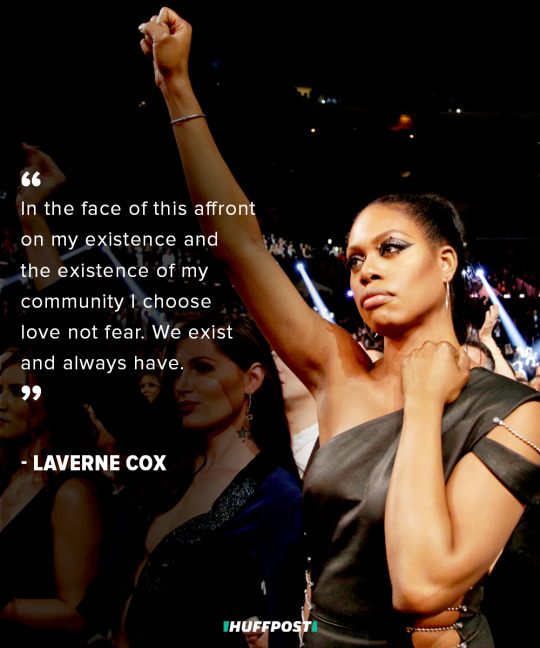
The Trump administration is working on a plan to severely narrow the legal definition of gender, according to a report in The New York Times on Sunday.
The proposed policy, according to the Department of Health and Human Services, would define gender “on a biological basis that is clear, grounded in science, objective and administrable,” meaning it would define gender as either male or female as determined by genitalia at birth. Any dispute about an individual’s gender would require genetic testing. This would have major repercussions for the transgender and gender nonconforming communities ― particularly in regard to health care.
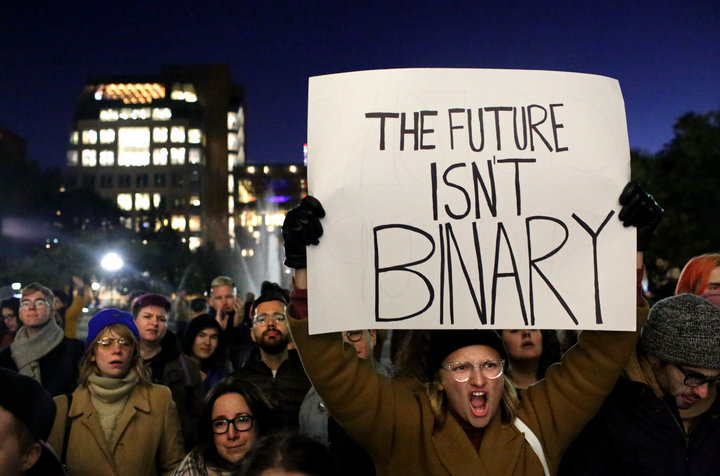
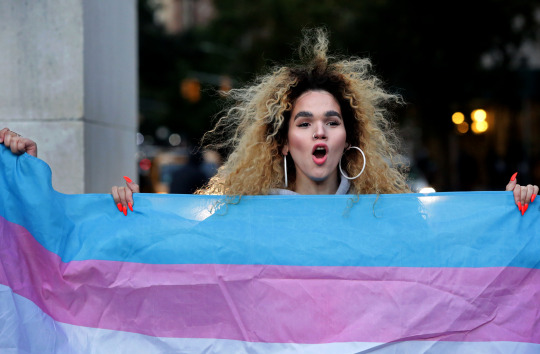
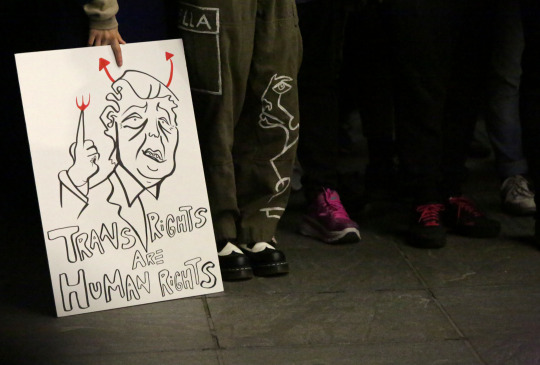
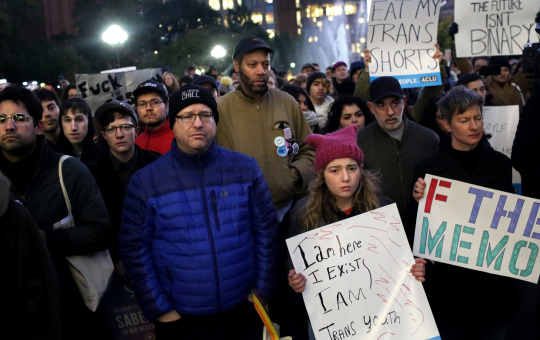
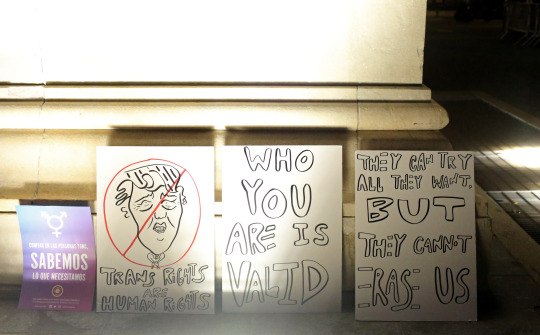
Since the Trump plan was revealed, protesters have been gathering online ― often using the hashtag #WontBeErased ― and in person around the country. On Sunday night, several hundred people gathered in Washington Square Park in New York City.
But there is still a lot of work to be done to make sure the trans and gender nonconforming communities are protected.
You’ve likely seen people coming out in droves to encourage others to vote; it’s one of the most important things you can do as an American. Casting ballots at the federal, state and local levels affects transgender rights. Check Vote.org for ways to promote turnout in your area. Call your friends and family members nearby to go to the polls with you, and remind those in other states to vote too.
Educate yourself
Being an ally isn’t just patting your trans or nonbinary friends on the back or retweeting them occasionally. It’s about respect and fighting for their rights. The first step to being a good ally is educating yourself on the basics — knowing someone’s preferred pronouns, avoiding stereotypes and learning what policies in government directly affect the trans and gender nonconforming communities. You can find a primer on those issues and more here.
Promote helpful resources and trans-led organizations
While many “prominent national organizations are not led by trans or nonbinary people,” many are and need help on both the national and local levels. Some of those organizations, according to Out magazine are: Audre Lorde Project, Casa Ruby, Familia: Trans Queer Liberation Movement, Fierce, Organizacion Latina de Trans en Texas, Southerners on New Ground, Sylvia Rivera Law Project, Trans Latin@ Coalition, Trans Law Center and Trans Lifeline. More comprehensive lists can be found at the Trans Justice Funding Project and Borealis Philanthropy’s Fund for Trans Generations.
Sharing numbers like the National Suicide Prevention Lifeline at 800-273-TALK (8255), the Trevor Project at 866-4-U-TREVOR (866-488-7386) and Trans Lifeline at 877-565-8860 can be immensely helpful for those in crisis.
Share the work of trans activists and journalists
Groups like Lambda Legal, the ACLU and the Transgender Law Center are legal organizations that ofter extensive information about trans rights and policies that affect them. Keep an eye on their social media pages to see if they’re holding events you can take part in or to share their messaging.
Additionally, sharing the work of trans and gender nonconforming journalists helps spread the messaging being put out by the community for the community. Too often, work about the trans community is written by people who are not members of that community ― which can be completely OK, as long as it’s done correctly. This piece in Them does an excellent job of explaining the problem with media organizations not hiring trans reporters to cover trans issues.
If you’re trans and you use a packer or breastforms on a day to day basis, do not use them at the airport. The body scanners that the TSA uses look for variations from a “male” or “female” body, so if you have bulges where they ‘shouldn’t’ be, you will get the patdown.
signal boost this, please.
there’s a page on the TSA’s website that has tips and info specifically for trans travelers!! I can’t remember everything it has on it but one of the big things is that if you get flagged for a patdown or other screening you can have it done in private if you so request 🙂 🙂






 magicpotatolover